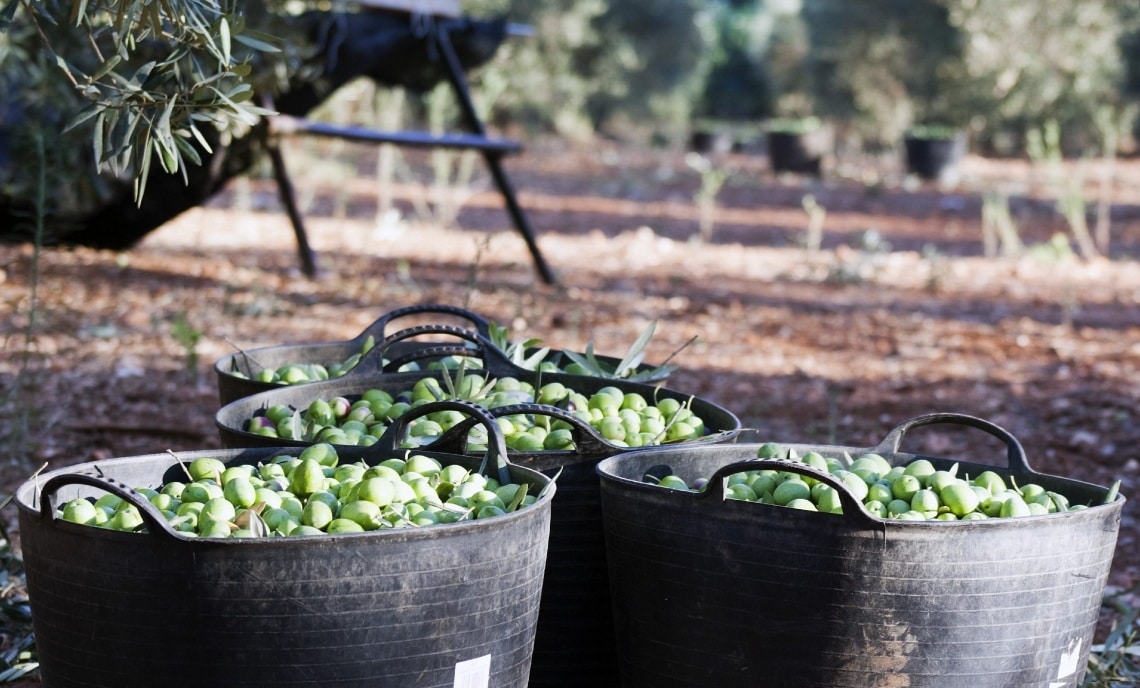
Traditional olive oil production has become a golden legacy and a time-honored tradition whose essence has hardly changed over the centuries. Although new technologies have improved the oil extraction process, techniques similar to the classic mode of operation are still used. Let’s see what this consists of.
The extraction of olive oil from olives is a process rooted in Mediterranean tradition and has been practiced for many generations. The traditional approach is remarkably simple. The fruit is crushed, and its juice is separated from vegetation, water, and residue until it settles into a fragrant and stable liquid.
Important Considerations before Harvesting Olives
The olives selected during harvest often determine the quality and flavor profile of the olive oil. Producers will pay close attention to the following conditions before production begins.
- Harvest: The timing of the harvest affects the flavor of the oil. Olives harvested earlier in the year can yield greener aromas and more peppery sensations, while a late harvest often yields riper, softer-tasting fruit.
- Quality of the fruit: Olives are checked closely for imperfections. Only fruit that remains intact and without blemishes or perforations should be selected, as this avoids the need to make “corrections” at a later stage in production.
- Timing: For best results, milling should take place as soon as possible to ensure the freshness of the fruit being used.
Once olives reach the mill, they are washed, classified, and stored. Upon completing these steps, the actual olive oil is prepared. The process of making olive oil is divided into 3 phases + storage.
- Grinding
- Pressing
- Decantation
- Storage
Stages of Olive Oil Production
Before delving into each phase, we should first take a look at where the oil comes from. This type of oil is found in the small vacuoles of olives. Extracting it involves breaking the fruit and making a paste that is then filtered and separated from the by-product that results from grinding.
- GRINDING
The grinding step (a technique for crushing the olives) has traditionally been done with stone mills. It was also common for olives to be ground using animal-powered or manual devices. This process creates an olive paste that continues to the pressing phase. Nowadays, this process has become more efficient through technological advances and the introduction of automation during the grinding phase.
- PRESSING
The resulting paste is spread onto fibrous esparto straw disks (a strong drought-resistant grass native to Spain and North Africa used to make everything from footwear to paper) that are then stacked to a certain height, forming a pile. The liquid is released, leaving the rest of the product soaking on the disks. Interestingly, the pressing process does not always produce the same quantity of olive oil, as this depends on the amount of paste and its consistency.
- DECANTATION
The oily juice is poured into a bottle or container. Due to the variations in density within the composition of the watery juice substance, the oil floats to the top while the water (along with other remnants) sinks to the bottom of the container.
- STORAGE
Although the oil extraction process ends here, in practice, several 18th-century texts describe the oil storage method as the final step. This settling phase eliminates some of the bitter aromas in the oil, while creating sweet and pleasant sensations along with certain nuances.
Evolution of Olive Oil Production
In the past, olive oil producers depended on animals like oxen and mules to power production. Modern olive oil production makes use of automated systems that facilitate a faster, more efficient extraction process. However, the fundamental objectives remain the same: create a paste and separate the oil from the remains of the fruit.
Frequently Asked Questions about Traditional Olive Oil Production
What happens to olives once they are crushed for oil extraction?
Crushing olives produces what is known as olive paste—a thick mixture made up of the fruit’s pulp, skin, small pieces of pit, natural vegetation, water, and tiny droplets of oil.
What purpose did fiber mats or disks serve in traditional olive presses?
Mats and disks were used to spread the olive paste evenly in stacked layers, allowing pressure to extract liquid efficiently while keeping most solid material contained.
How was the oil separated from water and solid particles?
Separation was achieved through decantation, a natural process in which gravity causes heavier water and solids to settle while the lighter oil rises to the surface due to differences in density.
Does using traditional methods guarantee higher-quality olive oil?
Not always. Oil quality still largely depends on factors such as the freshness of the olives, cleanliness during processing, and proper storage. Olive oil extraction is a purely mechanical process that avoids heat, solvents, and chemicals. When traditional practices are combined with modern knowledge, they help preserve the oil’s characteristic flavor—much as they have for centuries.